
Synopsis
Operating an 18-hole championship golf course in an arid ocean island environment requires complete independence from municipal freshwater supplies and fragile local groundwater aquifers. This blog post examines how NWD Golf engineered the agronomy and civil water infrastructure at Viveiro Golf Resort on Sal Island, Cape Verde—the country’s pioneer turfgrass course. We detail the mechanics of a 100% closed-loop irrigation system powered by treated municipal wastewater (TSE) and paired with advanced, salt-tolerant turfgrass cultivars. Our technical guide breaks down the subsoil engineering required to stabilize volcanic sands, prevent capillary salt intrusion, and protect coastal marine habitats from chemical runoff. By analyzing the integration of native tropical flora and high-efficiency subsurface filtration matrices, we show how sustainable island agronomy converts harsh maritime environments into vibrant, high-yield sporting destinations. Discover how NWD Golf combines cutting-edge water recycling utilities with strategic landscape architecture to deliver tournament-grade playing surfaces that thrive in extreme oceanic climates. Partnering with NWD Golf ensures your resort facility transforms from a water-vulnerable property into a self-sustaining, eco-certified landmark that secures long-term operational resilience, reduces utility overhead, and protects surrounding natural ecosystems.
Table Of Content
- The Arid Island Imperative: Overcoming Freshwater Scarcity in Maritime Master Planning
- Hydraulic Closed-Loop Architecture: Engineering Wastewater Recycling Infrastructure
- Agronomic Selection: Deploying Salt-Tolerant Turfgrasses for Brackish Irrigation
- Subterranean Defense: Soil Profiling, Sand Capping, and Capillary Salt Control
- Ecological Harmonization: Native Tropical Landscaping and Coastal Habitat Protection
- Commercial Sustainability: Operating High-Yield Island Resorts with Zero Municipal Water
- NWD Golf: World Leaders in Environmentally Adaptive Island Golf Architecture
- Our Specialized Island Agronomy and Sustainable Water Engineering Services
The Arid Island Imperative: Overcoming Freshwater Scarcity in Maritime Master Planning
Developing luxury sports real estate on sun-drenched, ocean-bound islands presents severe environmental and hydrological challenges for master planners. Remote island locations like Sal Island in Cape Verde feature arid climates, minimal annual rainfall, hyper-saline coastal groundwater tables, and porous volcanic sand soils. Traditional parkland golf designs that rely on high-volume freshwater abstraction are completely unviable in these ecosystems, as tapping local groundwater leads to rapid saltwater intrusion, aquifer depletion, and prohibitive utility expenses. Furthermore, environmental zoning mandates strictly prohibit dumping untreated runoff into surrounding oceanic ecosystems. At NWD Golf, we resolve these extreme environmental constraints by designing self-contained, closed-loop water ecosystems that treat water as a circular resource, allowing lush, world-class turfgrass fairways to flourish in the middle of the Atlantic Ocean without taking a single drop of municipal drinking water.
Hydraulic Closed-Loop Architecture: Engineering Wastewater Recycling Infrastructure
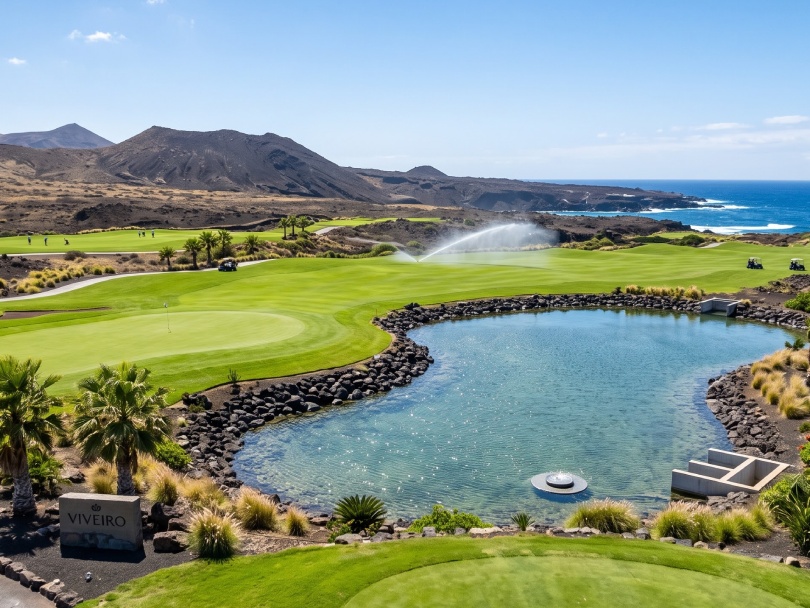
The operational backbone of Viveiro Golf Resort’s sustainable design lies in its custom-engineered, closed-loop irrigation infrastructure. Rather than relying on energy-intensive desalinization plants or scarce freshwater wells, the facility utilizes 100% recycled Treated Sewage Effluent (TSE) supplied from nearby municipal wastewater treatment facilities. NWD Golf designed a multi-tiered filtration and storage network featuring lined primary retention lakes, subsurface solar aeration pumps, and automated bio-wetland reed beds. As raw TSE enters the retention lake matrix, biological oxidation and organic sand-gravel filtration remove excess nitrites, heavy metals, and organic suspended solids naturally. The purified water is then routed through high-efficiency, variable-frequency drive (VFD) pumping stations connected to a central computerized irrigation grid. This smart network delivers precise, low-volume water applications directly to target rootzones during night hours, eliminating evaporative drift and maintaining complete hydraulic efficiency.
Agronomic Selection: Deploying Salt-Tolerant Turfgrasses for Brackish Irrigation
Irrigating with treated wastewater and managing continuous oceanic salt spray demands selecting specialized, warm-season turfgrass cultivars capable of surviving elevated salinity levels. NWD Golf specified certified Seashore Paspalum (Paspalum vaginatum) across the entire playing envelope at Viveiro Golf Resort. Seashore Paspalum possesses unique physiological salt-excreting mechanisms that allow it to thrive when irrigated with brackish water containing high sodium concentrations. The plant actively pumps salt ions out through leaf stomata while maintaining deep root system development, high cell turgor, and a vibrant emerald-green color. This salt-hardened turf matrix provides exceptional wear resistance, rapid recovery from foot traffic, and uniform ball roll on greens, delivering tournament-grade playing surfaces under high-salinity island conditions.
Subterranean Defense: Soil Profiling, Sand Capping, and Capillary Salt Control
Sustaining healthy turfgrass on volcanic sand islands requires building a subterranean barrier system that isolates rootzones from underlying saline water tables and coarse volcanic rock. NWD Golf engineered a continuous four-to-six-inch sand-capping blanket layer composed of well-graded, washed marine sand laid over a stabilized subgrade foundation. Beneath low-lying playing zones, an impermeable subsurface membrane liner works alongside a mechanical drainage grid to block high-salinity marine groundwater from rising into the rootzone through capillary action. During rain events or routine irrigation cycles, excess salts are flushed down through the open sand cap into subsurface collection pipes, preventing soil capping and root hypoxia while keeping rootzones aerated and biologically active.
Ecological Harmonization: Native Tropical Landscaping and Coastal Habitat Protection
Integrating an 18-hole championship layout into Cape Verde’s fragile volcanic ecosystem required a sensitive landscape architecture plan that preserves local biodiversity. NWD Golf compressed the active irrigated turf corridor to essential fairway landing zones and greens, wrapping out-of-play areas with native, drought-tolerant tropical flora, indigenous succulents, and volcanic stone features. These un-irrigated native buffers act as natural sand-traps and windbreaks, protecting fairways from severe Atlantic wind erosion while providing habitats for local bird species. Furthermore, all retention lakes and drainage swales are fully lined to prevent brackish irrigation water or organic fertilizers from leaching into surrounding marine waters, protecting fragile coastal coral reefs and marine life.
Commercial Sustainability: Operating High-Yield Island Resorts with Zero Municipal
Operating a zero-freshwater golf facility delivers transformative commercial advantages for island resort developers, eliminating one of the largest ongoing operational expenses in tropical hospitality management. By utilizing 100% recycled TSE water, Viveiro Golf Resort avoids millions of dollars in municipal water fees and fuel-intensive desalination energy bills over its operational lifespan. This sustainable resource strategy protects the resort from local water drought restrictions, ensuring the course remains immaculate year-round. As home to the Sal Independence Cup—Cape Verde’s premier amateur tournament—the facility operates as an eco-certified landmark that attracts high-spending international sports travelers, drives resort room occupancy, and accelerates surrounding real estate plot valuations.
NWD Golf: World Leaders in Environmentally Adaptive Island Golf Architecture
Building world-class golf courses in extreme, water-scarce island environments requires a design firm with proven global expertise, advanced civil engineering capabilities, and deep agronomic knowledge. NWD Golf stands as the preeminent global authority on sustainable island golf design, leveraging 52 years of collective architectural heritage across luxury international resorts. The NWD Golf brand is synonymous with closed-loop water engineering and arid island agronomy, ensuring your resort development functions as a self-sustaining, eco-certified asset that leads the global hospitality market. Our lead architects personally direct every phase of master planning, irrigation engineering, and turf selection, guaranteeing a perfect blend of high-stakes sporting luxury, operational resilience, and environmental stewardship.
Our Specialized Island Agronomy and Sustainable Water Engineering Services
Our specialized island agronomy services include complete water resource feasibility audits, soil salinity mapping, closed-loop TSE irrigation engineering, and full-scale master planning for tropical island resorts. We work in direct coordination with municipal water authorities, environmental protection agencies, and resort developers to ensure your project complies with international sustainability standards. NWD Golf provides total project oversight, from checking volcanic subsoil properties to supervising Seashore Paspalum turf establishment. As pioneers of environmentally adaptive sports architecture, we offer the data-driven design insights needed to turn extreme island water constraints into your resort’s greatest driver of operational stability, commercial prestige, and environmental distinction. Partner with NWD Golf to build an enduring, eco-certified golf sanctuary in any climate.
How does closed-loop wastewater irrigation function on a remote island golf course?
Closed-loop wastewater irrigation operates by taking 100% Treated Sewage Effluent (TSE) supplied from local municipal treatment facilities and recycling it into a self-contained, high-efficiency irrigation network. Raw wastewater enters lined retention reservoirs where bio-wetland reed beds, solar aeration, and organic sand filtration extract suspended solids, nitrites, and excess organic compounds naturally. The purified water is then distributed across target fairway and green rootzones through automated, computerized smart irrigation systems during night hours. This circular water framework eliminates reliance on municipal drinking water or desalination, ensuring continuous turf health while protecting local water tables from depletion.
Why is Seashore Paspalum the preferred turfgrass cultivar for arid island golf agronomy?
Seashore Paspalum (Paspalum vaginatum) is the premier turfgrass cultivar for arid island agronomy because of its extreme halophytic, salt-tolerant properties. The grass plant possesses specialized physiological salt-excreting stomata that allow it to thrive when irrigated with brackish water or exposed to continuous oceanic salt spray. It maintains deep root structures, vibrant green coloration, and tight turf density under high-salinity conditions where conventional grasses fail. Additionally, Seashore Paspalum provides exceptional ball roll on greens and rapid recovery from foot traffic wear, delivering tournament-quality playing surfaces with non-potable water.
How does subterranean sand capping prevent capillary salt intrusion in volcanic island soils?
Subterranean sand capping prevents capillary salt intrusion by placing a uniform blanket layer of washed, coarse-graded marine sand over a stabilized subgrade foundation. In ocean island environments, hyper-saline groundwater rises through porous volcanic rock and soil via capillary action, poisoning upper rootzones. Installing a four-to-six-inch sand cap isolates the developing root system from underlying salty subsoils. Combined with subsurface drainage pipes and impermeable membrane barriers in low-lying zones, rainwater and irrigation flush accumulated salts down through the porous sand cap, preventing soil capping and keeping the rootzone biologically active.
Can a resort course operating on 100% recycled water meet international tournament conditioning standards?
Yes, a resort course operating on 100% recycled water can meet and exceed international tournament conditioning standards when supported by proper bio-filtration and salt-hardened turf cultivars. Facilities like Viveiro Golf Resort host flagship events such as the Sal Independence Cup by maintaining immaculate fairway density and fast green speeds using recycled water. Automated bio-wetlands and sand filtration remove harmful impurities from municipal wastewater before irrigation, while Seashore Paspalum turf absorbs organic nutrients efficiently. This combination produces firm, fast, and visually vibrant playing surfaces that meet strict professional tour expectations.
How does native tropical landscaping reduce overall irrigation demand across a golf resort master plan?
Native tropical landscaping reduces irrigation demand by compressing managed turfgrass corridors strictly to active playing zones—such as fairways, tees, and greens—while surrounding out-of-play roughs with native, drought-tolerant flora. Planting indigenous island succulents, wild groundcovers, and local tropical trees creates attractive natural hazards that require zero supplemental irrigation once established. This spatial compression cuts total irrigated turf acreage by up to 50%, dramatically reducing total daily water volumes, pumping energy usage, and mechanical maintenance labor across the estate.
What environmental protection measures prevent irrigation runoff from damaging surrounding marine ecosystems?
Protecting fragile marine ecosystems from irrigation runoff requires lining all retention reservoirs, bio-swales, and low-lying drainage basins with durable, impermeable geomembrane liners. These liners block water containing organic fertilizers or salts from leaching down into coastal groundwater or migrating into ocean bays. Additionally, vegetated bio-swales and sand filters slow down stormwater runoff, filtering nutrients organically before water reaches holding ponds. This self-contained drainage setup ensures zero chemical discharge enters surrounding coral reefs and coastal habitats, helping island resorts secure prestigious global environmental certifications.

Pierfrancesco De Simone is a European Institute-accredited golf architect and engineer known for seamlessly merging ecology with modern strategy. With projects across Europe and Africa, he specialises in water-wise routing and habitat-rich design. At NWD Golf, Pierfrancesco advances sustainable innovation, ensuring every feature—from bunkers to waterways—respects land heritage while inspiring contemporary play.
- Pierfrancesco De Simone
- Pierfrancesco De Simone
- Pierfrancesco De Simone