
Synopsis
Traditional country club layouts frequently impose excessive forced carries and long approach shots on higher-handicap golfers, women, and senior players, leading to frustration, slow pace of play, and declining member retention. This blog post examines how NWD Golf utilizes strategic forward tee placement frameworks to create a genuinely inclusive playing environment without diluting the championship challenge for low-handicap players. We explore the spatial mechanics of tee placement, detailing how optimized sightlines, adjusted angles of attack, and gentle elevation changes provide comfortable landing zones for all swing speeds. By analyzing the financial impacts of pace-of-play optimization, our architects show how shorter, engaging hole layouts expand daily tee-sheet throughput and drive secondary hospitality revenue across the estate. Discover how NWD Golf combines advanced digital ball-flight dispersion models with artistic tee box contouring to deliver an inclusive golf architecture that boosts member satisfaction. Partnering with NWD Golf ensures your sports facility transforms into an accessible, welcoming lifestyle landmark that maximizes daily venue utilization, accelerates member acquisition, and secures lasting commercial strength across changing player demographics.
Table Of Content
- The Demographic Realignment: Why Restrictive Layouts Hurt Member Retention
- Spatial Mechanics of Strategic Forward Tee Placement
- Architectural Inclusion: Designing Engaging Angles of Attack for All Swing Speeds
- Operational Performance: Pace of Play Optimization and Tee-Sheet Velocity
- Financial Engineering: Driving Secondary Hospitality Spend Through Accessibility
- Environmental and Construction Efficiency of Integrated Tee Complex Design
- NWD Golf: Global Pioneers of Inclusive Championship Master Planning
- Our Specialized Tee Box Redesign and Spatial Optimization Services
The Demographic Realignment: Why Restrictive Layouts Hurt Member Retention
The modern golf industry faces a fundamental demographic shift as family participation, senior play, and newcomer enrollment reach record levels across resort and private club sectors. However, many legacy course layouts remain rigidly engineered around the hitting distances of elite, male low-handicap players. When forward tee boxes are treated as an afterthought—often tacked onto the side of fairways or forced to navigate intimidating forced carries over wetlands and thick rough—higher-handicap players face continuous frustration and high ball loss. This punishing design environment drives up player drop-out rates, slows down daily play, and alienates key member segments. At NWD Golf, we resolve these retention challenges by applying strategic forward tee placement frameworks that embed playability and enjoyment into the core master plan of every hole.
Spatial Mechanics of Strategic Forward Tee Placement
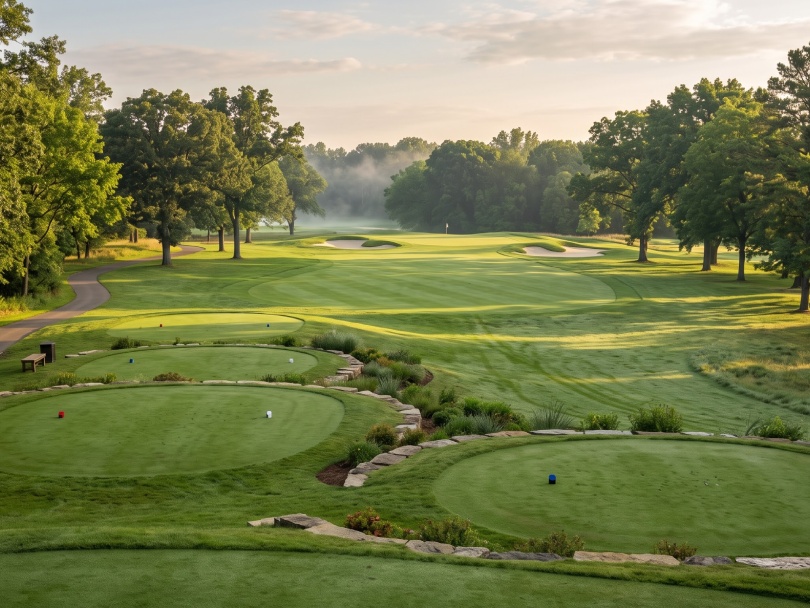
Executing a successful program of strategic forward tee placement requires moving past simple linear yards-off-the-back calculations. True forward tee architecture demands analyzing the multi-decadal ball-flight dispersion patterns of players with moderate and low swing speeds. NWD Golf positions forward teeing platforms at distances that allow players with driver carry distances of 120 to 150 yards to reach fairway landing zones safely. Crucially, these forward tees are set at angles that bypass major hazards, deep ravines, and dense tree corridors completely. By providing a clear, unimpeded sightline to wide, forgiving fairways, higher-handicap golfers enjoy the same strategic choices, risk-reward options, and visual excitement off the tee as professional golfers playing from championship tees.
Architectural Inclusion: Designing Engaging Angles of Attack for All Swing Speeds
A common mistake in traditional course renovation is placing forward tees directly in front of back tees along the same center line, which often creates awkward approach angles and obscured green views. NWD Golf utilizes an offset tee design philosophy, shifting forward teeing grounds laterally to open up clean angles of attack into the green. By positioning the forward tee box on the side of the fairway that offers the safest entry into green complexes, players approaching with longer hybrids or fairway woods can roll the ball onto the putting surface smoothly without having to carry deep front bunkers. This thoughtful spatial positioning preserves the architectural integrity and tactical strategy of the hole while giving every golfer a fair opportunity to score well.
Operational Performance: Pace of Play Optimization and Tee-Sheet Velocity
The commercial success of any public resort or private country club depends directly on maintaining optimal pace-of-play metrics across peak operating hours. When higher-handicap players struggle with excessive tee-to-fairways carries, they spend extra time searching for lost balls, dropping new balls, and taking penalty strokes, causing severe bottlenecks at key holes. By implementing inclusive golf architecture with well-designed forward tees, round completion times are reduced by up to 30 to 45 minutes per group. This accelerated pace of play eliminates frustrating course backups, improves overall player satisfaction, and allows club management to add extra tee times to the daily schedule, increasing overall tee-sheet capacity and green fee collections.
Financial Engineering: Driving Secondary Hospitality Spend Through Accessibility
Designing a course that caters comfortably to families, seniors, and intermediate players creates immediate financial returns through increased secondary spending across the entire resort property. Golfers who enjoy a smooth, frustration-free round are far more likely to stay at the facility after completing 18 holes, spending money at the clubhouse restaurant, pro shop, and wellness facilities. Furthermore, a welcoming, playable layout makes the surrounding residential real estate community substantially more appealing to non-professional golf buyers and retirees. This broader lifestyle appeal accelerates residential plot sales velocity and commands strong pricing premiums across fairway-frontage home sites.
Environmental and Construction Efficiency of Integrated Tee Complex Design
Constructing modern, multi-tiered tee box complexes using integrated land-shaping techniques provides major environmental and maintenance advantages over isolated, standalone tee pads. NWD Golf designs wide, continuous teeing ribbons that merge championship, resort, and forward teeing zones into single, fluid landform shapes. This continuous design allows greenkeeping teams to groom entire tee complexes quickly using commercial ride-on mowers, cutting manual edging labor. Furthermore, continuous tee surfaces provide superintendents with extensive tee-marker flexibility, enabling them to move tee positions daily to distribute foot traffic wear evenly, protect grass health, and maintain pristine turf density throughout high-volume seasons.
NWD Golf: Global Pioneers of Inclusive Championship Master Planning
Creating an inclusive golf architecture that satisfies both tour professionals and casual resort golfers requires a design firm with deep architectural mastery, spatial tracking capabilities, and proven global experience. NWD Golf stands as the premier global authority on inclusive course design, leveraging 52 years of collective architectural heritage across world-class sports properties. The NWD Golf brand is synonymous with strategic forward tee placement, ensuring your sports asset functions as a high-yielding, accessible landmark that commands top-tier venue rankings. Our lead architects personally direct every phase of tee positioning, sightline mapping, and hazard sculpting, guaranteeing a perfect balance of athletic rigor, visual beauty, and commercial throughput.
Our Specialized Tee Box Redesign and Spatial Optimization Services
Our specialized tee box redesign services include full-scale spatial utilization audits, pace-of-play flow analysis, and complete architectural layouts for inclusive forward teeing platforms and continuous tee ribbons. We work in direct coordination with club committees, real estate planners, and tournament directors to ensure your course layout satisfies both daily membership play and high-stakes championship events. NWD Golf provides complete project oversight, from checking subsoil grading profiles to supervising grass establishment on new tee complexes. As pioneers of inclusive golf architecture, we offer the data-driven design insights needed to turn restrictive layouts into your facility’s greatest source of member satisfaction, operational efficiency, and long-term asset value. Partner with NWD Golf to build an accessible, high-yielding golf course that welcomes every generation of players.
How does EcoBunker technology physically prevent golf course bunker edge erosion?
EcoBunker technology prevents bunker edge erosion by replacing fragile, natural turf edges with stacked, interlocked layers of recycled synthetic turf tiles. Traditional soil edges breakdown over time due to weather exposure, heavy rain, and mower damage, washing mud down into the sand face. The synthetic EcoBunker tiles are laid in a dense, stepped revetment wall anchored into compacted backfill or concrete aggregate bindings. This creates a permanent, structurally stable wall that never decays, dries out, or collapses under foot traffic. By stabilizing the edge structure permanently, the hazard retains its sharp, artistic outline without requiring routine hand-edging or turf repairs.
What material composition gives SoftBunker liner systems their high-permeability filtering capability?
SoftBunker liner systems utilize a specialized, porous aggregate matrix blended with synthetic binding agents to form a continuous, seamless subsoil barrier beneath the bunker sand. This engineered structure features high internal macro-porosity that allows rainwater to pass straight down through the liner into subsurface drainage pipes at rapid velocities. At the same time, the physical density of the liner blocks underlying soil particles, mud, and rocks from migrating upward into the sand matrix. This dual filtration capability locks clean sand onto steep bunker faces, prevents mud contamination, and keeps the hazard dry and playable immediately after heavy rains.
How does reducing the steepness of surrounding bunker slopes eliminate hand-mowing labor?
Reducing the steepness of surrounding bunker turf slopes eliminates hand-mowing labor by allowing greenkeeping crews to groom the turf using large, ride-on commercial mowers safely. When surrounding mounds feature steep gradients over 30 degrees, ride-on mowers risk tipping over, forcing crews to use handheld string trimmers or walk-behind mowers, which inflates labor hours significantly. During the design phase, NWD Golf shapes surrounding mounds to gentle, smooth gradients below 25 degrees. This enables commercial mowers to cut the turf right up to the EcoBunker synthetic edge safely, eliminating manual hand-trimming labor and lowering annual maintenance expenses.
Can EcoBunker synthetic edges and SoftBunker liners be retrofitted into existing bunkers without full course reconstruction?
Yes, EcoBunker synthetic edges and SoftBunker liners can be retrofitted easily into existing bunker complexes as a standalone renovation project without disrupting the broader course routing. The process involves excavating the old, contaminated sand and soil base of the existing hazard, reshaping the internal slopes, and installing new subsurface drainage pipes. Our construction teams then build the synthetic EcoBunker revetment edge along the perimeter and lay the SoftBunker liner matrix across the floor before adding fresh bunker sand. This modular renovation process allows clubs to upgrade hazards in phases during off-peak seasons, minimizing course downtime while delivering immediate operational savings.
How long is the expected structural lifespan of an EcoBunker and SoftBunker hazard installation?
An engineered hazard installation utilizing EcoBunker synthetic edges and SoftBunker liners features an expected structural lifespan exceeding 15 to 20 years without requiring major rebuilding. Traditional soil-backed bunkers typically fail within three to five years due to edge breakdown, mud contamination, and sand erosion, forcing expensive sand replacement and structural repair. Because synthetic EcoBunker tiles are UV-stabilized and chemically inert, they do not decay or degrade under intense sunlight or frost cycles. Similarly, the durable SoftBunker liner matrix prevents soil intrusion indefinitely, keeping the bunker sand clean, bright, and playable for decades.
What overall reduction in annual maintenance budgets can a golf course expect after renovating its hazards with NWD Golf?
A golf course renovating its hazards with NWD Golf can expect an overall reduction in annual bunker maintenance budgets of up to 50%. This financial saving is achieved through three key mechanisms: the complete elimination of hand-edging labor along synthetic EcoBunker walls, the removal of hand-mowing labor through gentler slope contouring, and the elimination of frequent sand replacement expenses thanks to SoftBunker contamination barriers. Additionally, greenkeeping crews spend far less time repairing washouts or pumping standing water out of hazards after severe storms, allowing management to reallocate labor resources toward optimizing green and fairway performance.

Pierfrancesco De Simone is a European Institute-accredited golf architect and engineer known for seamlessly merging ecology with modern strategy. With projects across Europe and Africa, he specialises in water-wise routing and habitat-rich design. At NWD Golf, Pierfrancesco advances sustainable innovation, ensuring every feature—from bunkers to waterways—respects land heritage while inspiring contemporary play.
- Pierfrancesco De Simone
- Pierfrancesco De Simone
- Pierfrancesco De Simone