
Synopsis
In the high-pressure environmental context of 2026, the role of a desert golf course designer has transitioned from traditional artist to a master of extreme environmental engineering. This blog explores the complex technicalities involved in creating championship-standard fairways amidst the shifting sands and intense heat of the Middle East and beyond. We examine the critical challenges of sand-face stability, where innovative stabilization techniques are required to prevent hazard erosion during desert wind events. By prioritizing thermal resilience, NWD Golf ensures that every green and fairway is engineered to withstand extreme temperature fluctuations while maintaining elite playability. Our analysis highlights how a golf course construction architect must integrate advanced sub-surface cooling and moisture-retention layers to ensure the survival of high-performance turf. We also delve into the use of arid landscape architecture, utilizing native flora and natural rocky outcrops to create a “Desert Links” aesthetic that is both stunning and sustainable. Whether you are developing a luxury resort in Doha or a private estate in the Mojave, understanding these technical nuances is vital for long-term project success. Discover how NWD Golf combines global wisdom with localized engineering to conquer the world’s most unforgiving climates. Our commitment to technical design services ensures that your arid-zone project becomes a benchmark of luxury, durability, and ecological intelligence.
Table Of Content
- The 2026 Desert Challenge: Engineering vs. Nature
- The Technical Blueprint of a Desert Golf Course Designer
- Master Class in Sand-Face Stability and Hazard Integrity
- Thermal Resilience: Protecting the "Emerald" Under Pressure
- The Role of the Golf Course Construction Architect
- Arid Landscape Architecture: Creating the Desert Links
- NWD Golf: Mastering the Extremes of 2026
- Our Specialized Technical and Arid-Zone Services
The 2026 Desert Challenge: Engineering vs. Nature
As the global expansion of golf continues into the arid regions of the world in 2026, the expertise of a desert golf course designer has become more valuable than ever. Developing a luxury sporting asset in an environment with extreme heat, minimal rainfall, and shifting sands requires a radical departure from traditional parkland design. Every routing decision must account for the local wind patterns and solar exposure to ensure player comfort and turf survival. At NWD Golf, we view the desert not as a barrier, but as a unique canvas for arid landscape architecture that celebrates the raw beauty of the wilderness. This involves a strategic balance between high-maintenance turf zones and “naturalized” waste areas that require zero irrigation. By mastering these environmental variables, we create courses that are as ecologically responsible as they are strategically challenging.
The Technical Blueprint of a Desert Golf Course Designer
The technical framework used by a desert golf course designer begins with a sophisticated analysis of the local topography and soil chemistry. In arid zones, high salinity levels can quickly degrade turf quality if the sub-surface drainage and soil amendments are not perfectly calibrated. Thermal resilience is engineered from the ground up, starting with specialized root-zone mixes that retain moisture while allowing for essential aeration. This scientific approach ensures that the “cool-season” feel of a championship course can be maintained even when surface temperatures exceed 45°C. Furthermore, the designer must coordinate closely with irrigation engineers to ensure that every drop of water is delivered with surgical precision. This high-level technical design is the foundation upon which every successful desert project is built.
Master Class in Sand-Face Stability and Hazard Integrity
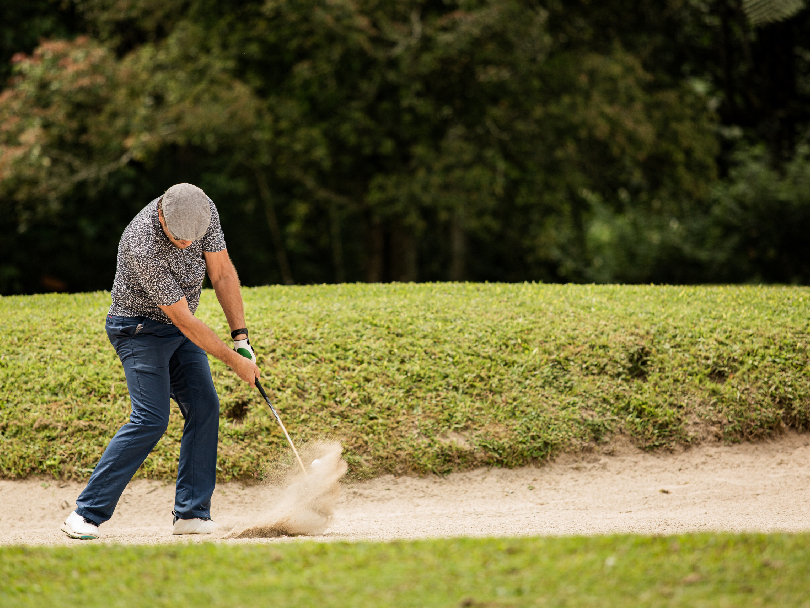
Maintaining sand-face stability is one of the most visible challenges in desert golf, where high winds can reshape a course’s hazards in a single afternoon. To combat this, we utilize a variety of advanced stabilization techniques, including capillary concrete liners and biodegradable soil binders that hold the sand in place without affecting its playability. This ensures that the bunkers retain their intended shape and aesthetic “pop” even during the most severe sandstorms. Without these technical interventions, the desert golf course designer risks a constant cycle of hazard degradation and sand contamination. By securing the integrity of the bunkers, we reduce the long-term maintenance burden and ensure that the course remains a fair and consistent test of golf. The result is a more durable and visually striking landscape that honors the ruggedness of the desert.
Thermal Resilience: Protecting the "Emerald" Under Pressure
Thermal resilience is a non-negotiable requirement for any luxury course in 2026, where climate volatility is a constant factor for developers. This involves more than just selecting drought-tolerant grass; it requires the installation of sub-surface sensors and automated cooling systems that manage the soil’s temperature in real-time. By protecting the root zone from extreme heat, we ensure that the turf remains vibrant and resilient, even during prolonged heatwaves. This focus on thermal resilience is a core part of our commitment to technical design services, providing our clients with a facility that outlasts its competitors. We also utilize “Micro-Climate” design, where strategic mounding and tree placement provide natural shade and wind protection for the most sensitive areas of the course. This holistic engineering approach is what defines a true championship venue in an arid environment.
The Role of the Golf Course Construction Architect
The role of the golf course construction architect is vital for ensuring that the designer’s vision is translated into a functional and durable reality. In the desert, construction is a race against the elements, requiring a high level of logistical precision and technical oversight. The golf course construction architect manages the complex layering of liners, drainage pipes, and high-performance irrigation networks that are hidden beneath the surface. They also oversee the “shaping” of the land, ensuring that the contours are designed to manage flash-flood events that are common in arid regions. By providing rigorous on-site supervision, they ensure that the project is delivered to international standards and within the developer’s budget. This role is the technical anchor that holds the entire project together during the most challenging phases of development.
Arid Landscape Architecture: Creating the Desert Links
Elevating the aesthetic of the course through arid landscape architecture involves a creative integration of native rocks, succulents, and local sand colors. Instead of trying to recreate a lush European parkland, we embrace the “Desert Links” style, where the fairways emerge like emerald ribbons from a sea of golden dunes. This design philosophy significantly reduces the total irrigated acreage, making the project more sustainable and less expensive to operate. Technical design services allow us to map these natural transition zones with precision, ensuring that the course feels like it has always been part of the landscape. This approach also supports local biodiversity by providing habitats for indigenous desert wildlife within the out-of-play areas. In 2026, the most prestigious desert courses are those that demonstrate a deep respect for their natural surroundings.
NWD Golf: Mastering the Extremes of 2026
NWD Golf is the preeminent global expert in this specialized field, leveraging 52 years of collective experience to conquer the world’s most challenging terrains. Our USP lies in our “Integrated Arid Design” methodology, where sand-face stability and thermal resilience are treated as primary architectural pillars. We understand that in the desert, a course is a living machine that requires constant technical calibration. The NWD Golf brand is synonymous with durability, ensuring that your investment is protected against the harsh realities of the arid climate. Our lead architects have a proven track record of delivering world-class results in regions like the Gulf and the American Southwest. We combine creative flair with the most advanced engineering to ensure your project remains a premier global destination.
Our Specialized Technical and Arid-Zone Services
Our specialized arid-zone services include comprehensive salinity audits, wind-pattern modeling, and full-scale arid landscape architecture. We provide a golf course construction architect for every project to ensure that the technical specifications of our designs are met with absolute precision. NWD Golf offers a level of technical design services that covers everything from sub-surface cooling to advanced wadi-inspired drainage systems. Our lead architects—Vijit, Garrett, and Pierfrancesco—personally oversee the routing and shaping to ensure the course remains a fair and stunning challenge. We are your strategic partners in transforming underutilized desert land into a high-value, sustainable sporting asset. Partner with NWD Golf to lead the arid-zone revolution and secure a legacy of excellence in 2026’s most challenging environments.
What are the primary technical challenges a desert golf course designer faces in 2026?
The primary technical challenges for a desert golf course designer involve managing extreme heat, high soil salinity, and the constant threat of sand encroachment. In 2026, thermal resilience is a major focus, as designers must find ways to keep turf alive and playable when air temperatures reach extremes. This requires sophisticated sub-surface cooling and irrigation systems that are far more complex than those used in temperate climates. Another significant challenge is ensuring sand-face stability in bunkers and waste areas to prevent the desert wind from constantly reshaping the course. Designers must also balance the luxury expectations of members with the ethical and financial necessity of extreme water conservation. Successful design in this environment is a delicate act of balancing high-end aesthetics with rugged, industrial-strength engineering.
How is sand-face stability maintained in hazards during high-wind desert events?
Sand-face stability is maintained through a combination of physical liners and chemical stabilizers that “bind” the sand particles together without affecting playability. A golf course construction architect will often specify capillary concrete or advanced polymer liners that hold the sand at steeper angles, preventing it from slumping to the bottom of the hazard. In some cases, we also use “stepped” or sod-walled edges that provide a mechanical barrier against wind erosion. Choosing the correct sand grain size and weight is also critical; heavier, angular sands are less likely to be displaced by the wind than fine, round particles. These technical design services ensure that the bunkers remain functional and beautiful, even in the windiest desert corridors. Without these measures, the course would require constant and expensive manual sand replenishment.
What role does thermal resilience play in the survival of high-performance turf?
Thermal resilience is the ability of the turf and the root zone to recover from and resist heat-related stress, which is vital for maintaining championship conditions. A desert golf course designer achieves this by selecting salt-tolerant and heat-resistant grass varieties that are specifically bred for the 2026 climate. Beneath the surface, the design includes “perched water tables” and moisture-retention layers that ensure the grass has constant access to hydration even during peak sun exposure. We also utilize sub-surface sensors that trigger automated fans or cooling flushes when the root zone temperature hits a certain threshold. This engineering ensures that the “Emerald” appearance of the course is not just a surface-level luxury but a deeply rooted biological reality. Thermal resilience is thus the most important factor in protecting the developer’s investment from climate-related failure.
Why is a golf course construction architect essential for projects in arid environments?
A golf course construction architect is essential because they provide the specialized technical oversight needed to manage the complex infrastructure hidden beneath the fairways. In the desert, the margin for error is extremely thin; a minor failure in the irrigation or drainage network can lead to total turf loss in just a few days. The construction architect ensures that all materials, from the liners used for sand-face stability to the high-pressure pipes, meet the specific requirements of the arid climate. They also manage the heavy earthmoving and shaping needed to create the arid landscape architecture, ensuring that the drainage works correctly during rare but intense desert rainstorms. Their presence on-site ensures that the technical design services are executed perfectly, protecting the developer from costly rework and delays. They are the quality-control link between the architect’s vision and the finished project.
How does arid landscape architecture reduce the total water consumption of a golf course?
Arid landscape architecture reduces water consumption by significantly shrinking the total “irrigated” acreage of the course and replacing it with natural desert features. Instead of wall-to-wall grass, a desert golf course designer will use “target golf” layouts where only the tees, fairways, and greens are irrigated. The out-of-play areas are designed with native rocks, hardy succulents, and natural waste areas that require no water or maintenance. This approach can reduce a course’s water footprint by as much as 50% while actually enhancing the visual drama of the site. These designs celebrate the “Desert Links” aesthetic, which is highly prized by modern golfers for its rugged and unique challenge. By integrating these natural elements, the course becomes more sustainable and aligns with the environmental goals of 2026.
What are the key benefits of hiring a firm with specialized technical design services for desert golf?
Hiring a firm with specialized technical design services ensures that your project is built on a foundation of data-driven engineering rather than just aesthetic guesswork. These firms bring a deep understanding of thermal resilience and soil science, which is critical for ensuring the long-term health of your sporting asset. They also provide the expertise needed to solve complex problems like sand-face stability and brackish water management, which are common in arid regions. By working with a desert golf course designer who also provides on-site golf course construction architect support, you reduce the risk of project failure and cost overruns. This level of professional rigor ensures that the course remains a premier global destination that is both beautiful and operationally profitable. In the harsh environments of 2026, technical expertise is the ultimate insurance for luxury development.

Pierfrancesco De Simone is a European Institute-accredited golf architect and engineer known for seamlessly merging ecology with modern strategy. With projects across Europe and Africa, he specialises in water-wise routing and habitat-rich design. At NWD Golf, Pierfrancesco advances sustainable innovation, ensuring every feature—from bunkers to waterways—respects land heritage while inspiring contemporary play.
- Pierfrancesco De Simonehttps://nwdgolf.com/blogs/author/pierfrancesco-de-simone/
- Pierfrancesco De Simonehttps://nwdgolf.com/blogs/author/pierfrancesco-de-simone/
- Pierfrancesco De Simonehttps://nwdgolf.com/blogs/author/pierfrancesco-de-simone/
- Pierfrancesco De Simonehttps://nwdgolf.com/blogs/author/pierfrancesco-de-simone/